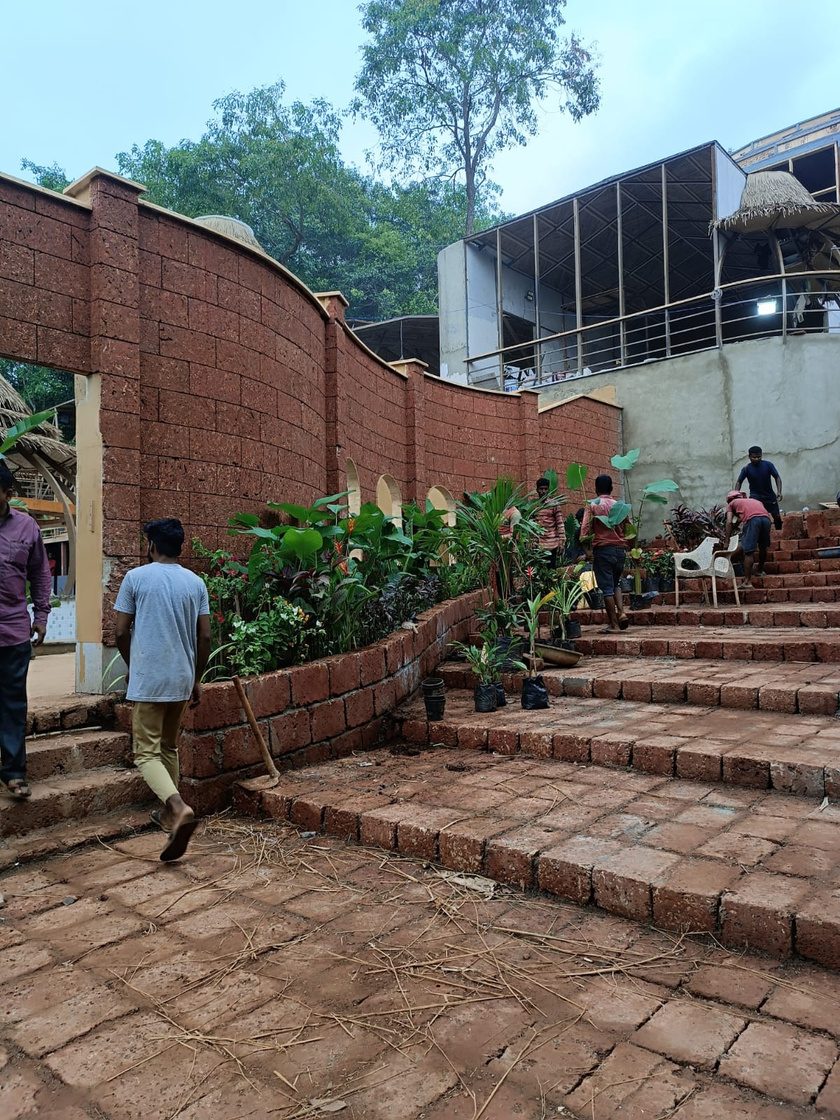
If you own a property in Goa you probably own a laterite wall. The red, porous, iron-rich blocks are the local building stone, and they are the backdrop to most gardens here.
They are also one of the least hospitable places in a garden to put a plant, and gardens fail along their walls more often than anywhere else.
Why the strip beside a wall is hard
It is hotter. Laterite absorbs heat through the day and releases it into the evening. The air at the base of a south or west-facing wall in April is meaningfully warmer than the air ten metres away.
It is drier. The wall sheds rain sideways, so the strip at its foot gets less than the open ground does — even in a monsoon. In the dry season it is the first place to bake.
There is less root room than it looks. The footing occupies part of the profile, and behind the visible face there is often rubble fill rather than soil.
Light is uneven. One side of a wall is in shade for most of the day and the other is in full sun. People plant both sides with the same scheme and wonder why only one worked.
How the beds get built
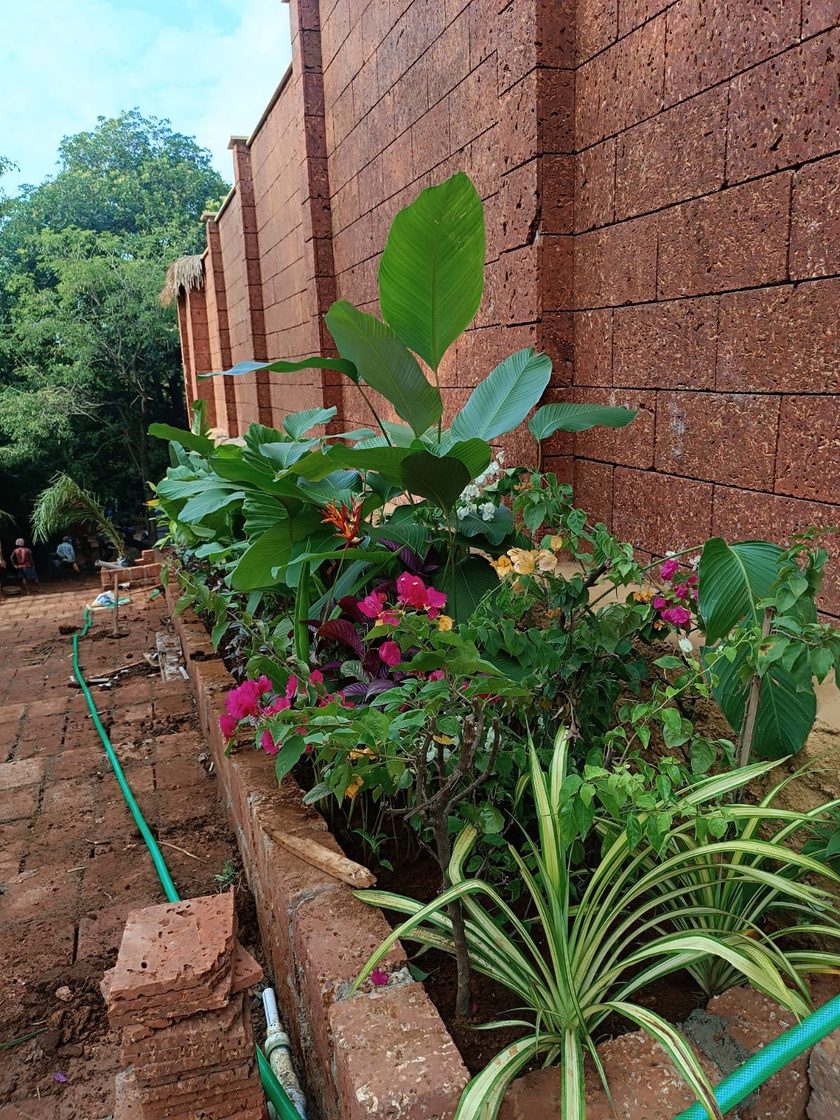
The photograph here is from Diaz, where the beds are terraced against the walls. The terracing is doing three things at once, and none of them is decorative:
- It raises the root zone above the footing and away from the driest strip, so plants get a genuine depth of soil instead of a shallow pocket over rubble.
- It holds the bank in the monsoon. Runoff coming down a laterite face carries soil with it. An edged, terraced bed gives that water somewhere to slow down and drop what it is carrying.
- It makes the planting readable. A bed with a defined edge against a stone face looks intentional. The same plants in a flat strip at the foot of the wall look like they arrived there.
We build the edge in the same stone wherever we can, which is cheap here and means the structure disappears into the setting rather than competing with it.
What we plant there
Against a hot wall, the things that hold up are the ones adapted to exactly that — reflected heat, sharp drainage, periodic drought:
- Frangipani, which is almost purpose-built for it and throws good shadow on stone.
- Bougainvillea, which actively prefers the stress and flowers better for it. A hot, dry wall is where it does its best work.
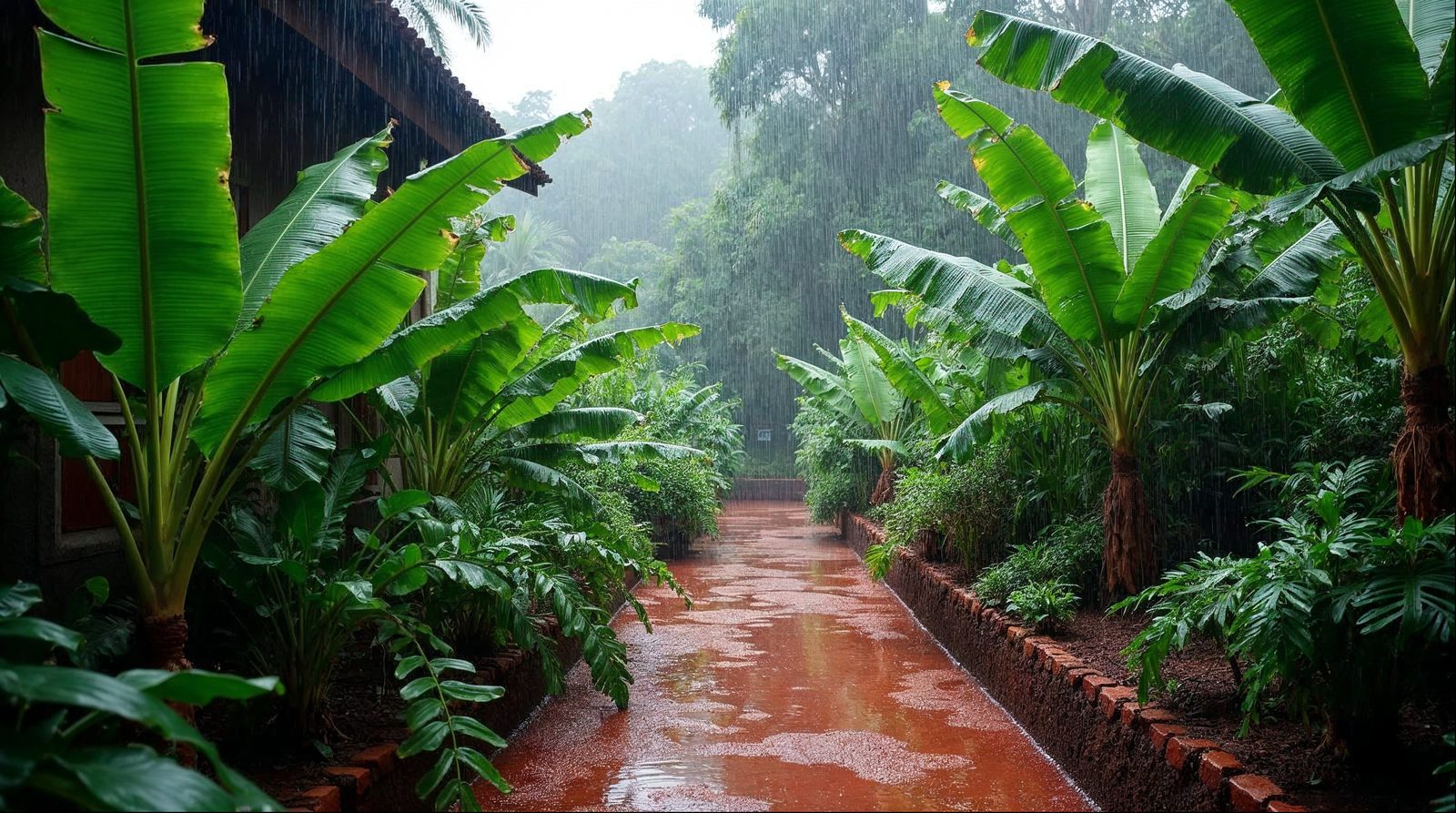
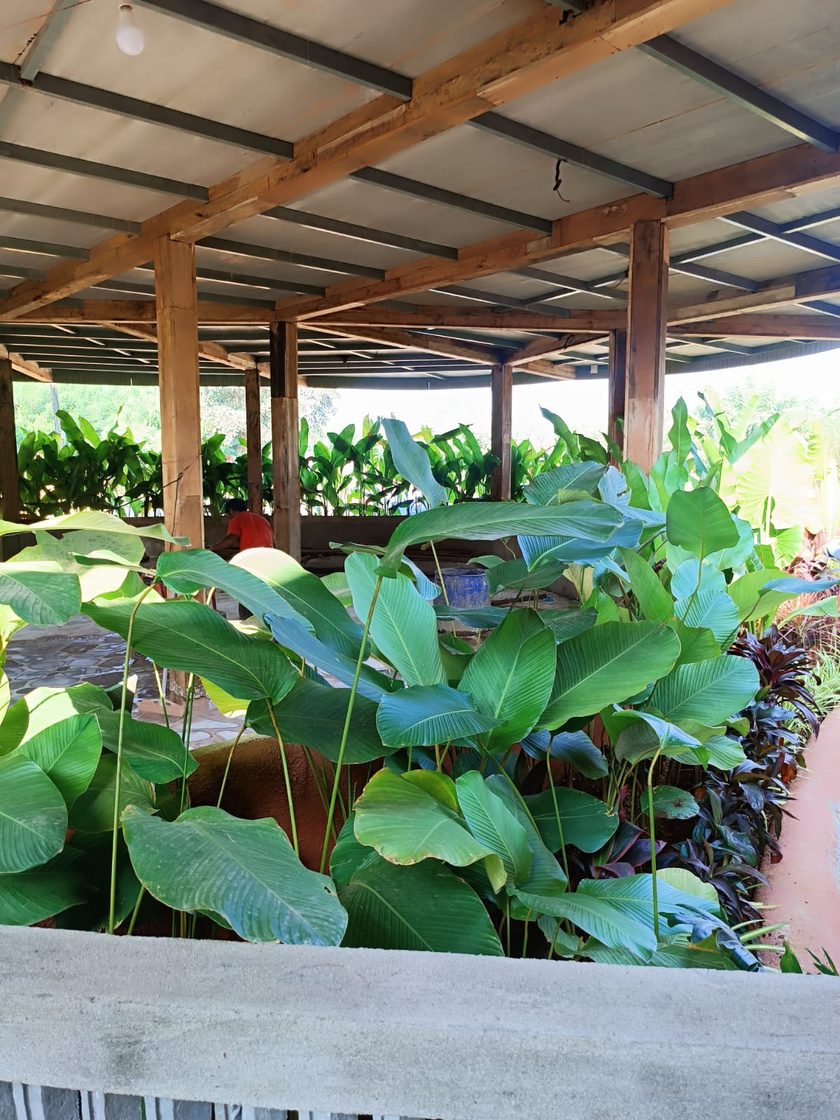
- Heliconia and banana where the wall faces away from the afternoon sun and there is moisture — they give the height and the broad leaf that make the stone read as a backdrop.
- Dense ground cover at the foot, always, to stop the strip drying out and to keep the soil where it was put.
On the shaded face the list changes completely. Ferns, aroids and anything happy in low light do well there, and the plants from the sunny side will sulk.
The mistake we see most
Planting a climber directly on the wall. It looks wonderful within two seasons and then you have a structural conversation, because adhesive roots work into old mortar joints and because taking the plant off later takes the face of the stone with it.
Planting a tall shrub in front of the wall gives you the same green face, keeps the stone visible where you want it, and leaves the wall alone. On a heritage or an old boundary wall, that is the only version we will recommend.