Most gardens in Goa are not killed by the monsoon. They are killed in October, once it stops.
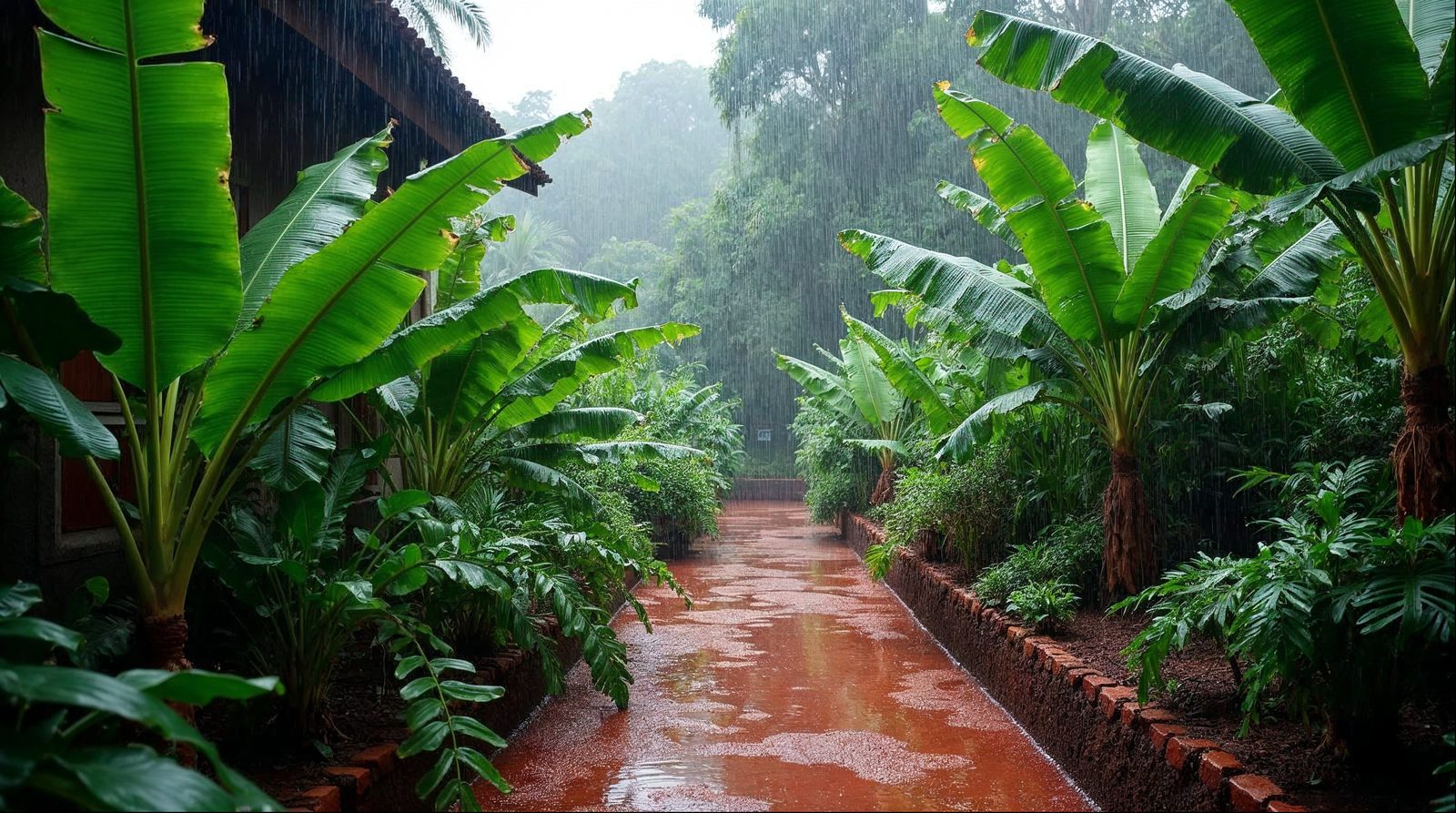
That sounds backwards, so it is worth being precise about what the year actually does to a plant here. From June to September a garden gets somewhere near two and a half metres of rain. Everything grows, fast, and it grows soft — long internodes, thin cell walls, big leaves, shallow roots that never had to go looking for water. Then the rain stops almost overnight, the humidity drops, and the same plant is holding a canopy it cannot supply. That is when things brown off and people conclude the plant was wrong.
Usually the plant was fine. The sequence was wrong.
The three things the climate actually tests
Drainage in the wet. Goa’s soil is largely laterite — iron-rich, red, and once it is compacted it sheds water rather than taking it. A bed cut into laterite without a drainage layer becomes a bowl. Roots sitting in a bowl for six weeks rot, and the plant dies in August looking as though it was under-watered.
Drought in the dry. From January the same garden gets nothing. A planting scheme that only works with daily irrigation is a maintenance contract disguised as a garden, and most people do not realise that is what they have bought until the second dry season.
Salt and wind near the coast. Within a few hundred metres of the sea, the wind carries salt. It burns the margins of anything that has not evolved to deal with it. This is why a plant list that works beautifully at Assagao can fail at Vagator, four kilometres away.
What we plant, and why
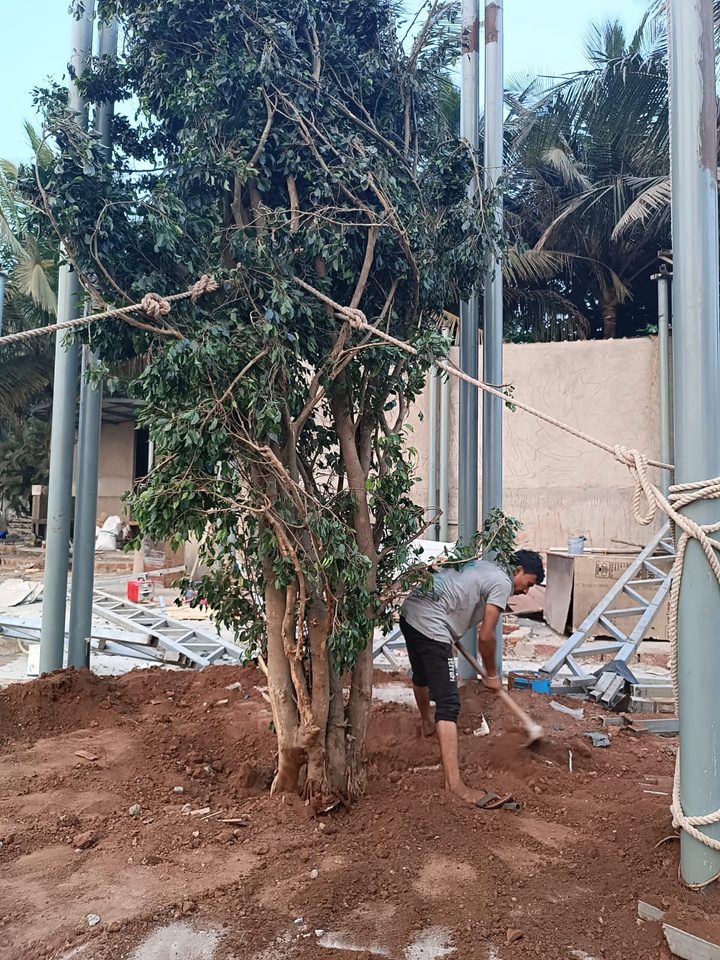
We grow our own stock at two nurseries, at Sangolda and Vagator. That is not a marketing detail — it is the single biggest thing that determines whether a plant establishes. A plant raised in Goa has already been through a monsoon and a dry season in Goan soil and Goan humidity before it ever reaches your site. A plant trucked in from a nursery on the Deccan arrives having known none of that, and it spends its first year acclimatising rather than growing.
The species that hold up here are mostly the ones a Bali garden already uses, which is a large part of why that style suits Goa:
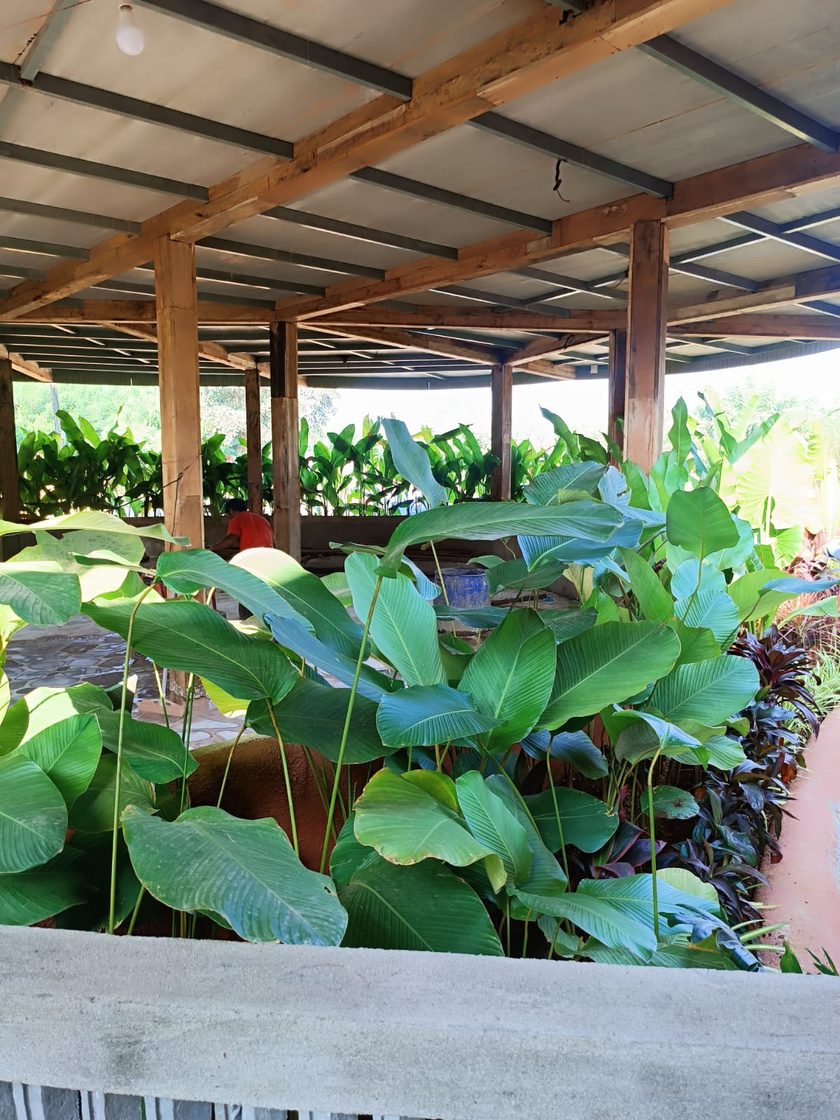
- Heliconia, banana, traveller’s palm for structure and the big foliage the style depends on. They take the rain and they take the heat.
- Frangipani for form, particularly near the coast. It handles salt wind well and is almost indifferent to the dry season.
- Bougainvillea for colour, on the understanding that it flowers on stress. Feed and water it generously and you get an enormous green shrub with no flowers on it.
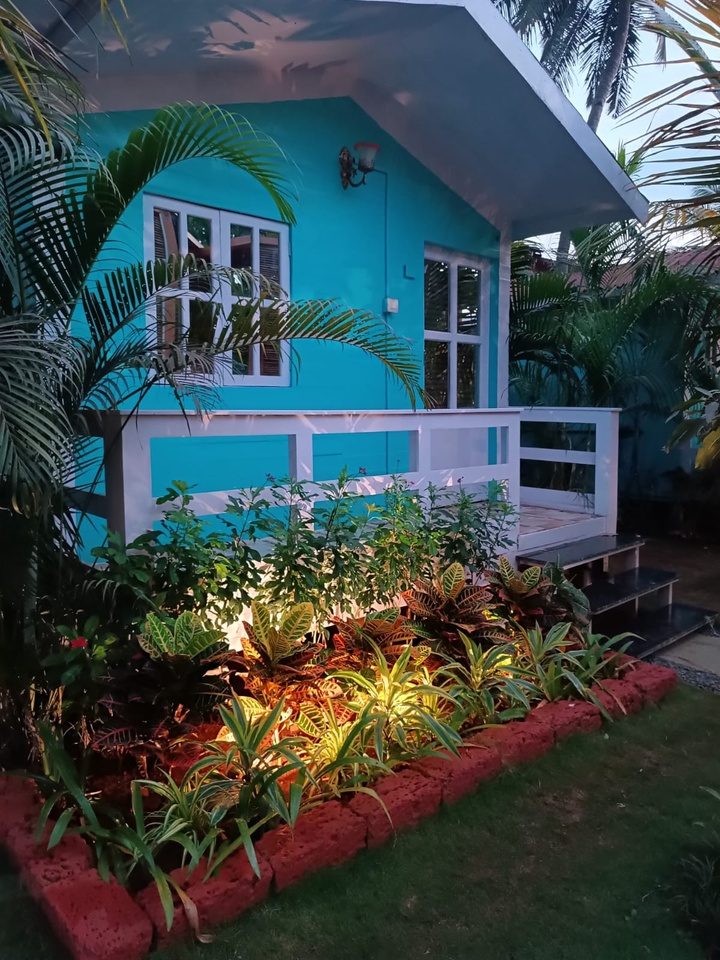
- Ground cover, everywhere. Bare laterite between plants bakes in the dry and washes in the wet. Covering the soil is not decoration; it is what stops the bed from moving.
The ones we are careful with are the temperate imports that look wonderful for one season — plenty of them sell well and survive until the following June.
The part that is not planting
Grading and drainage go in before a single plant does, and on most of the jobs we take on that is the majority of the work. At Diaz the beds are terraced against laterite walls, which means the water leaving the top of the bank has somewhere to go rather than taking the bed with it. It reads as a planting job. It was mostly a structure job.
If you take one thing from this: ask whoever is quoting you where the water goes in July, before you discuss species. If the answer is vague, the plant list does not matter yet.
What this does not fix
Nothing here makes a garden maintenance-free. Tropical planting grows hard for four months a year and it needs cutting back, feeding and thinning, or by the third year it is a thicket and the structure the design depended on has disappeared inside it. A planting scheme chosen for the climate reduces the work and stops it being emergency work. It does not remove it.