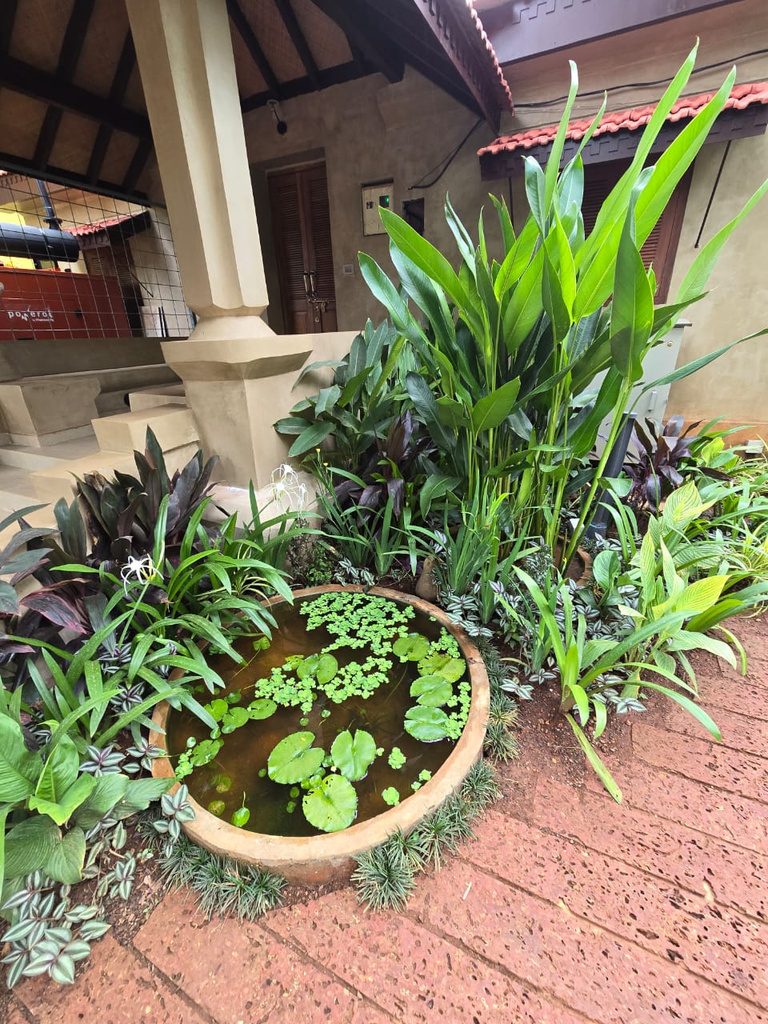
Bali gardens are our stated specialisation, and it is the term clients use when they show us a photograph of what they want. Usually the photograph is of somewhere in Ubud, and usually what they have taken from it is a plant list — frangipani, heliconia, a stone statue, some water.
You can install every one of those things and not get the garden in the photograph. The plants are the least important part of what is going on.
The four things that are actually doing the work
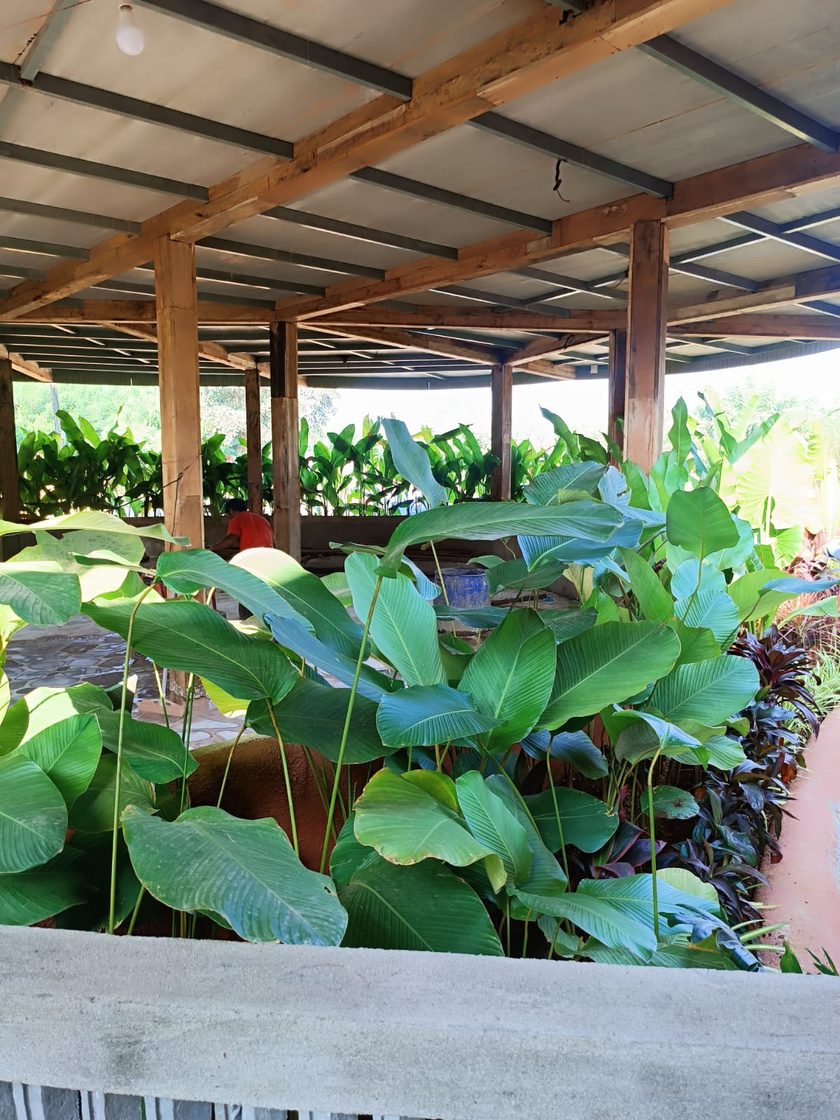
Enclosure. A Bali garden is a room. You are inside it, with green above eye level on at least two sides. That is why the style works so well in a courtyard, a side return, or against a boundary wall, and why it rarely works in the middle of an open lawn — there is nothing to be enclosed by.
Layering. Canopy, mid-storey, ground cover, in that order and all present at once. Most gardens here have canopy and ground and nothing in between, which is what makes them read as thin. The mid-storey is what fills the eye.
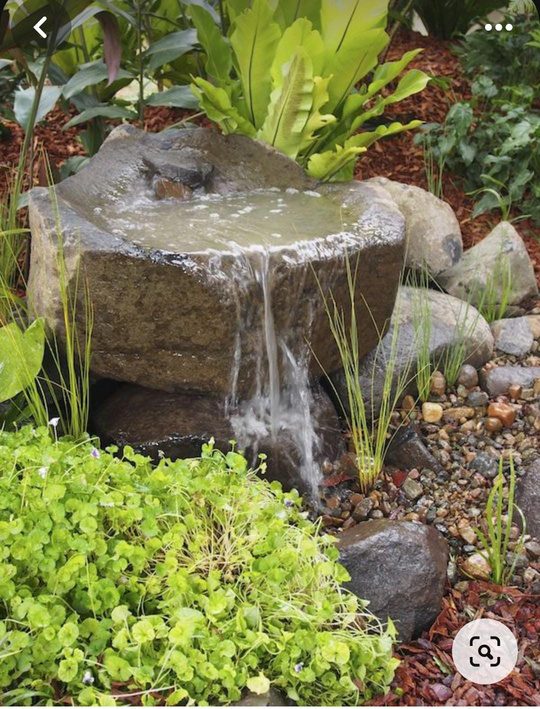
Stone and water as structure, not as ornament. The stone is the floor, the edge and the retaining. The water is set into the planting rather than placed in front of it. A statue dropped onto a lawn is decoration; the same statue in a planted recess is part of the room.
Restraint in colour. It is overwhelmingly green, with flower used sparingly as a punctuation. The temptation is to add colour everywhere, and it is what most often breaks the effect.
Why it suits Goa
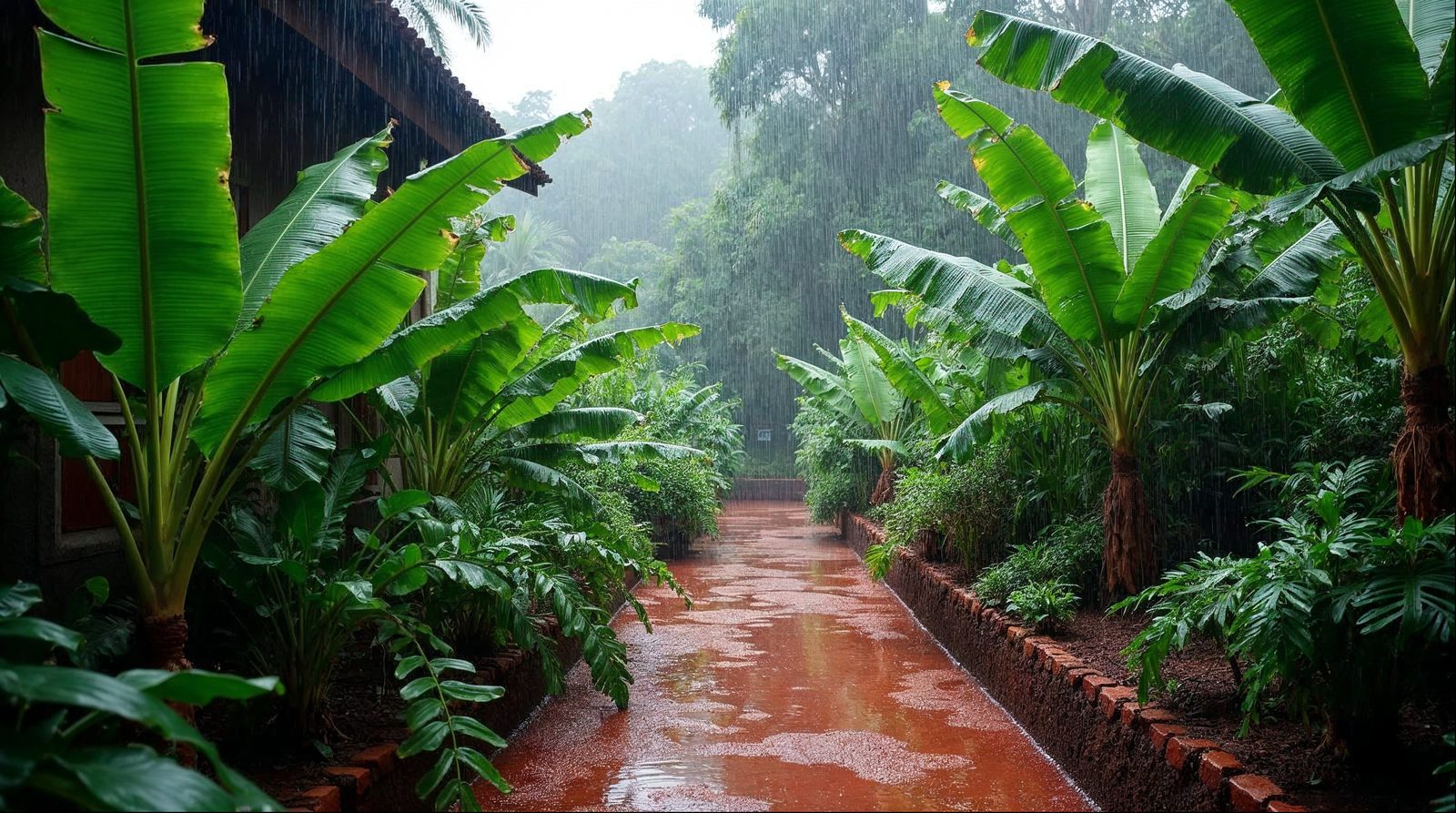
This is the useful part, and it is not a coincidence. The style developed in a climate very close to this one — heavy monsoon, high humidity, strong sun, similar latitude. So:
- The plants it uses are the plants that thrive here anyway, which means it is not fighting the climate the way an imported temperate scheme does.
- The dense layering shades its own soil, which is exactly what Goan gardens need through the dry season and what stops beds washing in the wet.
- The heavy use of stone suits a place where laterite is the local material and is cheap.
- The enclosure gives shade, which is what actually makes an outdoor space usable in April.
An English border and a Bali garden cost roughly the same to install here. One of them will still be there in three years.
Where it goes wrong
Too few plants. The single most common failure. The style depends on density, and a bed planted at conventional spacing never closes over. It looks sparse for its whole life.
The statue problem. Buddha figures, stone lanterns and water bowls are the easy part of the look and the part people buy first. Placed without the planting around them they read as garden centre, not as Bali.
No maintenance plan. Dense tropical planting grows hard for four months a year. Left alone for two seasons the layering collapses into one undifferentiated mass, and the structure that the whole effect depended on is gone. This style needs the thinning more than most.
What we would ask you first
Whether you want a garden you sit in or one you look at. The Bali approach is emphatically the first. If your space is a view from a first-floor terrace, a layered enclosed garden is the wrong answer and something more open will serve you better.
That question decides more than the plant list does.